%20Large.jpeg)

The AI-Fluent Leadership Framework: How to Make AI a Daily Creative Behavior
AI adoption: does it start from the top or the bottom?
After working with global retailers, design organizations, and consumer brands, the answer has been remarkably consistent.
AI adoption always starts with leadership — because teams model what leaders normalize.
When leaders approach AI with curiosity, clarity, and consistency, teams follow.
When leaders hesitate, AI stalls. It becomes experimental instead of transformational.
Across the most successful AI-enabled organizations we’ve partnered with, three leadership levers determine whether AI becomes part of the company’s DNA or just another side project.
1. People: Who Leads the Change
AI transformation requires clear ownership and the right champions.
High-impact organizations do three things:
- Install a strong change leader.
Someone close enough to the design process to understand nuance, senior enough to influence behaviors.
- Build “power users” early.
These are naturally curious individuals who translate AI into practical workflows for everyone else.
(A designer who masters On-Body quickly becomes the internal go-to.)
- Reward experimentation and speed to clarity.
Leaders praise the designer who shows five rendered directions in a day — not just the perfection of the final design.
These people set the pace. They normalize that AI is how the team thinks, not just how it finishes.
2. Program: How AI Is Operationalized
Leadership turns AI from a tool into a process.
We see three markers of strong AI programs:
Clear Targets
Teams define what “good” looks like:
- number of renders before reviews
- number of contextual lifestyle or on-body visualizations per collection
- samples replaced
- time saved
Defined AI-Embedded Workflows
AI shows up at specific points:
- early silhouette exploration
- print development
- SDR decks
- buyer presentations
- tech pack handoff
- PDP content creation
Aligned Success Metrics
Teams measure:
- iteration speed
- cross-functional clarity
- storytelling strength
- reduced sampling
- faster approvals
When the program is defined, AI stops feeling optional and starts feeling operational.
3. Culture: What Becomes Normal
AI fluency becomes real when everyday creative behavior changes.
What AI-fluent leaders normalize:
- Narrating how they personally use AI.
(“I used Multi-View this morning to explore back views.”) - Open sharing of prompts and workflows.
Prompt libraries become a new form of craft. - Celebrating AI wins in team meetings.
Not just outputs, but the process behind them. - Treating AI as a creative rhythm, not an extra task.
It becomes part of thinking, not after-the-fact polishing.
Leadership normalizes the behaviors teams adopt.
The Question for Every Leader
“What are the behaviors, rituals, and expectations I’m reinforcing about AI each week?”
Because AI adoption isn’t determined by the tools your company buys — it’s determined by the behaviors leaders normalize.
Some companies accelerate.
Others stall.
The difference is AI fluency.
👉 Ready to embed AI fluency in your design culture? Let’s build your framework together.
Heading 1
Heading 2
Heading 3
Heading 4
Heading 5
Heading 6
Lorem ipsum dolor sit amet, consectetur adipiscing elit, sed do eiusmod tempor incididunt ut labore et dolore magna aliqua. Ut enim ad minim veniam, quis nostrud exercitation ullamco laboris nisi ut aliquip ex ea commodo consequat. Duis aute irure dolor in reprehenderit in voluptate velit esse cillum dolore eu fugiat nulla pariatur.

Merchandising and design now create together live in meetings—no more weeks of back and forth.”
[[VP of Merchandising] blog-quote-ttl]
[[$30M alternative eCommerce fashion retailer] blog-quote-subttl]
Quote Name Style
Ordered list
- Item 1
- Item 2
- Item 3
Unordered list
- Item A
- Item B
- Item C
Bold text
Emphasis
Superscript
Subscript

Visualize Your Product Displays | Raspberry AI
Turn planograms and display diagrams into photoreal, retail-ready mockups with Raspberry AI’s Edit Module—ideal for merchandising, VM, and buyer presentations.
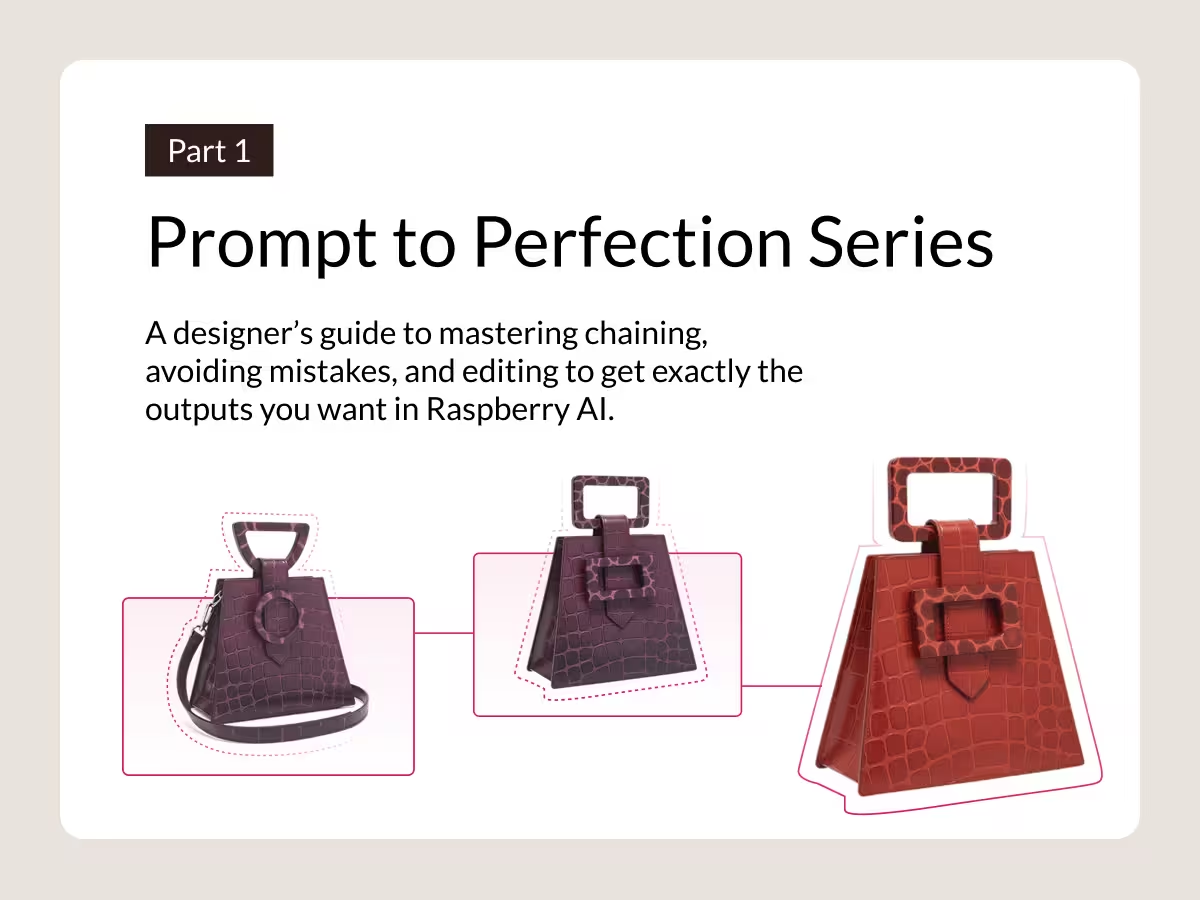
Prompt Chaining in Raspberry AI: How to Build Ideas Step by Step for Better Results
Get better results in Raspberry AI with prompt chaining—iterate with reference images, generate variations, and fine-tune with similarity sliders.

Instantly Turn Your Moodboards into High Quality Visuals with Raspberry AI
Turn fashion moodboards into luxury editorial, runway, lookbook, and street style images in minutes using Raspberry AI’s Edit module and custom prompts.
Sign Up for Our Newsletter
We’re constantly enhancing our product. Stay informed with the latest updates.

Ready to Design Smarter, Faster, and at Scale?
Start creating stunning photorealistic designs in just a few clicks.